

































































Latex Printing: Everything You Need to Know
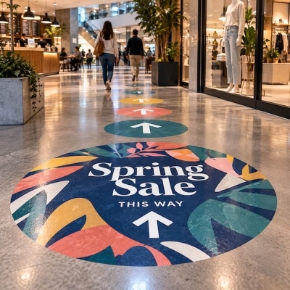
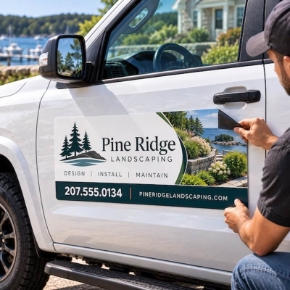
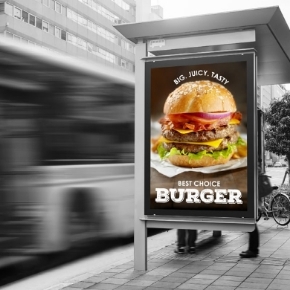
Latex printing is the technology behind most of the indoor signage you see every day: the retail graphics in a store window, the wallpaper in a restaurant, the stickers on a laptop, the banner at a trade show. It is HP's answer to the sign shop's oldest problem, how to print durable, vivid graphics without the smell, the ventilation, and the waiting time. The ink is water-based, the prints come out dry, and the work is ready to finish the moment it leaves the printer.
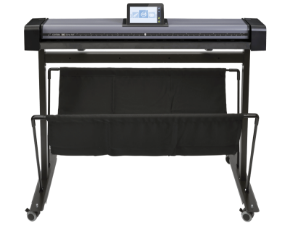
Here is the short version. A latex printer lays down water-based ink, then heat evaporates the water and cures the ink into a thin resin film on the media. That film is what makes latex prints instantly dry, scratch resistant, and odorless. HP's current lineup covers every size of sign shop: the Latex 630 for value, the Latex 730 for production speed, and the Latex 830 for high-volume work, with white-ink W versions of all three and the rigid-capable R530 for boards. This guide explains how latex printing works, what you can print with it, what it costs to run, and which printer fits your shop.
The one-sentence answer: latex printing cures water-based ink into a resin film with heat, so prints come out instantly dry and odorless, and HP's lineup gives you three 64-inch roll printers, the 630 for value, the 730 for speed, and the 830 for volume, plus white-ink W versions and the rigid-capable R530.
Watch the entry-level head-to-head: the Latex 630 against the Epson S7170 solvent printer, with print quality, speeds, and running costs compared:
How Does Latex Printing Work?
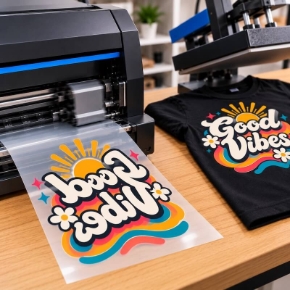
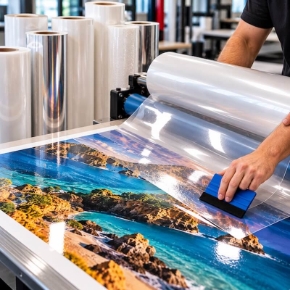
A latex printer works in three steps. First, the printheads lay water-based HP Latex ink onto the media. Second, heaters inside the printer, running around 240 degrees, evaporate the water out of the ink. Third, what is left behind, the latex polymers, cure into a thin resin film that sits on the surface of the media. There is no chemical reaction with the media and no solvent carrier to evaporate, so there is nothing to outgas and nothing to wait for.
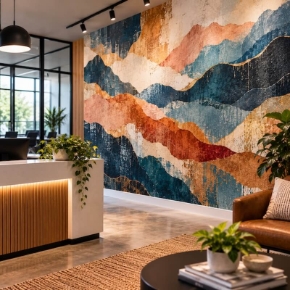
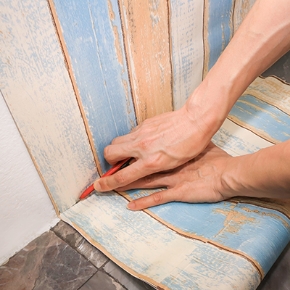
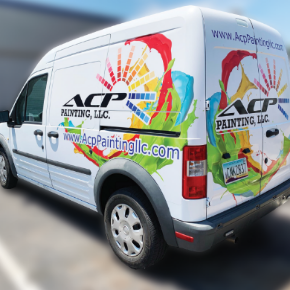
That resin film is the whole story. It is what makes latex prints dry the second they leave the printer, ready for lamination, trimming, or delivery with no waiting time. It gives the print instant scratch resistance and the flexibility to stretch and conform, which is why latex is a proven choice for vehicle wraps. And because the ink cures into a thin, uniform layer on the surface, it preserves the texture of the media underneath, which is why latex is the go-to technology for wallpaper and wall coverings.
The other half of the story is the air. HP Latex inks are water-based and odorless, with zero hazardous air pollutants, and they carry UL ECOLOGO and UL GREENGUARD certifications. That means no special ventilation, no solvent smell building up in a small shop, and prints that are safe to hang in schools, hospitals, and retail spaces the same day they are printed.
The one-line version: latex printing is water plus heat. The water carries the ink, the heat removes the water, and what is left is a flexible resin film that is dry the second it leaves the printer.
What Can You Print With a Latex Printer?
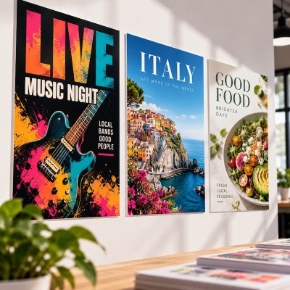
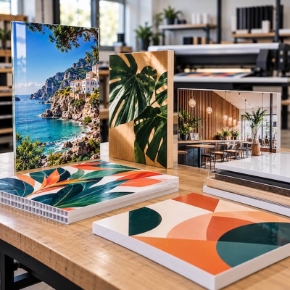
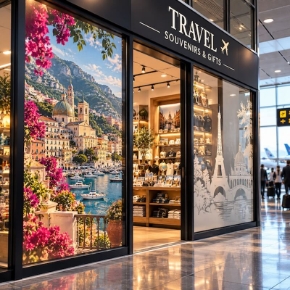
The short list covers most of what a sign shop sells: banners, vehicle wraps and fleet graphics, window graphics, stickers and decals, wallpaper and wall coverings, retail and point-of-purchase displays, canvas and fine art, textiles and fabrics, backlit displays, and double-sided banners. The Latex 730 and Latex 830 add automated double-sided printing, so block-out banners and two-sided retail signs come off the printer finished, with no manual flipping and re-registering.
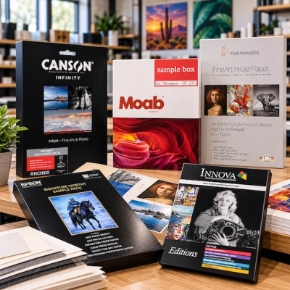
The media range is the latex advantage. Because the ink cures into a film on the surface instead of bonding chemically with the media, latex prints on coated and uncoated vinyl, papers, banner, canvas, film, and fabrics, including aqueous and UV-coated media that solvent printers cannot touch. That range is why one latex printer can cover signage, decor, and soft signage work that would otherwise need two machines. Rigid boards are the one exception: roll latex printers print flexible media only, so boards need the R530, covered below.
The HP Latex Lineup at a Glance
| Printer | Ink | Top speed | White ink | Regular price | Best for |
|---|---|---|---|---|---|
| 630 | HP 832, 1-liter cartridges | Up to 150 sq ft/hr | No, see 630W | $16,445 | Value and entry-level latex |
| 630W | HP 832, 1-liter cartridges | Up to 150 sq ft/hr | Yes | $19,745 | White ink at the entry price |
| 730 | HP 832, 1-liter cartridges | Up to 334 sq ft/hr | No, see 730W | $21,845 | Production speed and color consistency |
| 730W | HP 832, 1-liter cartridges | Up to 334 sq ft/hr | Yes | $26,595 | White ink at production speed |
| 830 | HP 873, 3-liter cartridges | Up to 388 sq ft/hr | No, see 830W | $32,345 | High-volume work, lowest running cost |
| 830W | HP 873, 3-liter cartridges | Up to 388 sq ft/hr | Yes | $34,595 | High-volume white ink flagship |
| R530 AI | HP 873, 3-liter cartridges | Up to 258 sq ft/hr | Yes | $102,899 | Rigid boards and flexible rolls in one machine |
Regular list prices. Ink is not included with any latex printer. See the current pricing information at the top of this page.
HP Latex 630: The Value Pick
The Latex 630 is HP's entry-level 64-inch latex printer, and it replaced the discontinued Latex 365 as the value pick in the lineup. It prints up to 150 sq ft/hr at standard quality, and up to 194 sq ft/hr in 4-pass mode, with vivid color, smooth gradients, and sharp 4-point text. The ink set delivers about 10% higher color gamut than the previous generation of HP Latex inks. The head-to-head video at the top of this page puts the 630 against the Epson S7170 on quality, speed, and cost.
The 630 is built for shops that want latex without a production-machine price. Automatic maintenance and user-replaceable printheads keep it running with minimal fuss, the fast front-loading system saves space, and job storage in the printer, up to 10 GB, makes reprints easy. The box includes the printer, printheads, maintenance cartridge, stand, take-up reel, edge holders, and HP SAi Flexi RIP Basic software, plus 12 months of warranty. The printer is about 102.5 inches wide, 33 inches deep, and 55 inches tall, weighing 507 lb. Freight delivery is required.
The Latex 630 is regularly priced at $16,445, with additional savings available through HP promotions that vary from month to month. See the current pricing information at the top of this page. Call 1-800-771-9665 for current availability and freight delivery options. Note: ink cartridges are not included.
630W: White Ink at the Entry Price
The Latex 630W is the same printer with high-opacity white ink added, and it brings white-ink work to an entry-level price. White opens the highest-margin applications in wide format: window graphics, clear films, labels, decals, and prints on colored and metallic media. White modes include spot, underflood, overflood, and 3-layer, with white spot printing at up to 64 sq ft/hr. HP's flexible white ink does not crack when canvas is folded or wraps are stretched, and it does not yellow over time. Automatic maintenance makes white behave like any other color in the ink set, with no manual purging routines.
The Latex 630W is regularly priced at $19,745, with additional savings available through HP promotions that vary from month to month. See the current pricing information at the top of this page. Call 1-800-771-9665 for current availability and freight delivery options. Note: ink cartridges are not included.
630 Print and Cut Plus Solutions
If stickers, decals, and contour-cut window graphics are your business, the Print and Cut Plus bundles pair the printer with the HP Latex 64 Plus Cutter from day one. The two devices print and cut simultaneously, so there is no stopping the printer to cut and no productivity lost. The cutter is 64 inches wide, cuts up to 44 inches per second diagonally, and carries 0 to 600 grams of downforce adjustable in 5-gram steps, with a drag knife, TurboCut, and tangential emulation modes. HP Barcode job recognition and OPOS marks keep jobs matched accurately, and HP FlexiPRINT and CUT RIP handles printing and cutting from one workflow, with True Shape nesting to save media.
The Latex 630 Print and Cut Plus Solution is regularly priced at $22,095, and the white-ink Latex 630W Print and Cut Plus Solution is regularly priced at $25,745, with additional savings available through HP promotions that vary from month to month. See the current pricing information at the top of this page. Call 1-800-771-9665 for current availability and freight delivery options. Note: ink cartridges are not included. The 630 bundle needs eight HP 832 1-liter cartridges to get running, and the 630W bundle needs nine.
HP Latex 730: The Production Pick
The Latex 730 is the next-generation 64-inch latex printer, replacing the 700 series with faster output, sharper color consistency, and instant-dry prints. Production speeds run up to 334 sq ft/hr in 4-pass mode, 226 sq ft/hr in 6-pass, and 183 sq ft/hr in 8-pass. HP Pixel Control manages ink mixing and distribution for uniform color, and the embedded spectrophotometer handles color profiling automatically, so output stays consistent job after job. Universal printheads and a 50% longer-life maintenance cartridge keep upkeep simple.
The 730 adds the workflow features production shops ask for: automated double-sided printing on PVC-free banners, textiles, and papers; fabric support; spindle-less front loading that prints from the leading edge to save media; and HP PrintOS Production Hub for remote job management, plus the PrintOS Sustainability Amplifier. The printer is 101.7 inches wide, 33.6 inches deep, and 55.2 inches tall, weighing 575 lb, and it handles rolls up to 121 lb. Outdoor durability is backed by the 3M MCS Warranty and ICS Performance Guarantee, and the 730 is EPEAT Gold registered with EPEAT Climate+, the only such certification in the signage industry.
The Latex 730 is regularly priced at $21,845, with additional savings available through HP promotions that vary from month to month. See the current pricing information at the top of this page. Call 1-800-771-9665 for current availability and freight delivery options. Note: ink cartridges are not included.
Watch the mid-tier head-to-head: the Latex 730 against the Epson S8170 solvent printer:
730W: White Ink at Production Speed
The Latex 730W is the white-ink version of the 730, with the same speeds and color quality plus a full white ink system. An automatic recirculation system keeps white ink moving between the cartridge and the printheads, so it does not settle or clog, and when white is not in use the printheads move to an offline rotation chamber, so no ink goes to waste. White modes include spot, underflood, overflood, 3-layer, and 5-layer at densities up to 260%. White speeds run 183 sq ft/hr for white spot, 96 for overflood, 47 for underflood, 32 for 3-layer, and 16 for 5-layer white, and white prints faster in underflood and 3-layer modes than the older 700 and 800 series thanks to a new drying system with extra capacity.
The Latex 730W is regularly priced at $26,595, with additional savings available through HP promotions that vary from month to month. See the current pricing information at the top of this page. Call 1-800-771-9665 for current availability and freight delivery options. Note: the full set of 1-liter ink cartridges is sold separately.
HP Latex 830: The High-Volume Pick
The Latex 830 is the fastest 64-inch latex printer HP makes, built for shops where the printer rarely stops. Production speeds run up to 388 sq ft/hr in 4-pass mode, 226 sq ft/hr in 6-pass, and 183 sq ft/hr in 8-pass. The difference from the 730 is the ink system: 3-liter HP 873 cartridges that you can hot-swap mid-print without stopping production, so long runs keep running and cartridge changes drop to a fraction of what the 1-liter machines need.
Everything else matches the 730: HP Pixel Control, the embedded spectrophotometer, automated double-sided printing, spindle-less front loading, HP PrintOS Production Hub, EPEAT Gold with Climate+, and the 3M MCS Warranty and ICS Performance Guarantee. The printer is 101.7 inches wide, 34.1 inches deep, and 55.2 inches tall, weighing 644 lb, and it handles rolls up to 121 lb. A one-year limited hardware warranty is standard, with HP Plus Service Plans available in 2-year through 5-year terms.
The Latex 830 is regularly priced at $32,345, with additional savings available through HP promotions that vary from month to month. See the current pricing information at the top of this page. Call 1-800-771-9665 for current availability and freight delivery options. Note: ink cartridges are not included.
Watch the flagship head-to-head: the Latex 830W against the Epson S9170 on quality, color, white ink, speeds, and cost:
830W: The White Ink Flagship
The Latex 830W is the 830 with white ink, and it is the top of the latex lineup. It carries the same 388 sq ft/hr color speed and the same 3-liter hot-swap cartridges, plus the full white system: spot, underflood, overflood, 3-layer, and 5-layer white modes at densities up to 260%, automatic white recirculation, and the offline rotation chamber that keeps white ink waste at zero. White prints faster in underflood and 3-layer modes than the prior generation, thanks to the new drying system with extra capacity. If your shop sells window graphics, backlits, and prints on clear or dark media at volume, this is the machine built for it.
The Latex 830W is regularly priced at $34,595, with additional savings available through HP promotions that vary from month to month. See the current pricing information at the top of this page. Call 1-800-771-9665 for current availability and freight delivery options. Note: ink cartridges are not included.
What About Rigid Media? The HP Latex R530 AI
Roll latex printers print flexible media only. For rigid boards, HP's answer is the Latex R530 AI, a compact all-in-one hybrid that prints directly onto rigid boards up to 2 inches thick and flexible roll media up to 64 inches wide in one machine. The HP High Control Belt System keeps printing predictable across both kinds of media, and the printer runs on single-phase power, which simplifies installation compared with equipment that needs three-phase. Speeds run up to 258 sq ft/hr in indoor production modes. It uses 3-liter cartridges, including white ink with automatic recirculation, and HP Pixel Control for consistent color. The printer is 103.5 inches wide and 60.9 inches high, 68.1 inches deep without tables and 126 inches with them, weighing about 1,455 lb.
The AI in the name is real. Automatic Print Mode Selection, powered by edge AI, recommends the optimal print mode for each job, so operators spend less time guessing at settings. The R530 AI also includes an AI PC with display and 2 years of HP PrintOS Production Hub with Direct Job Submission and AI capabilities. The standard Latex R530 is the same hybrid hardware without the AI package. Direct-to-rigid printing also cuts waste: instead of printing vinyl and mounting it to a board, you print straight onto the board.
The R530 is listed at $86,899 for the printer only, a price that already reflects a $10,000 trade-in for eligible customers, with a full ink set adding $3,078 for a total of $89,977. The R530 AI is listed at $102,899 and is available beginning January 2027. Call 1-800-771-9665 for current availability and trade-in eligibility. We put the R530 to the test on 18 by 24 corrugated plastic yard signs, up to 80 signs per hour in Draft mode, 60 in Speed mode, and 30 in Quality mode. Read the full test in HP Latex R530 Review: Can It Print 80 Yard Signs Per Hour?
Watch our take on the R530 AI:
White Ink: What It Does and Why It Pays
White ink is the highest-margin work in wide format. It is what lets you print window graphics, clear films, labels, decals, backlit displays, and prints on dark or metallic media, jobs a color-only printer cannot produce at all. Only the W models print white: the 630W, 730W, and 830W, plus the R530 and R530 AI.
White ink works in five modes. Spot lays white only where the design needs it. Underflood puts white beneath color on transparent films so the colors pop. Overflood adds a block-out layer for double-sided window graphics. 3-layer sandwiches color between two white layers for day and night backlits. 5-layer, on the 730W, 830W, and R530, adds even more density, up to 260%. The mode you pick depends on the job, and the RIP handles the layering.
White ink has a bad reputation on other technologies because it settles, clogs, and wastes ink. Latex white is built to avoid all three. An automatic recirculation system keeps white ink moving between the cartridge and the printheads, so it does not settle. When white is not in use, the printheads move to an offline rotation chamber, so there is no purging and no wasted ink. And HP's flexible white ink does not crack when canvas is folded or wraps are stretched, and it does not yellow over time. White speeds vary by mode: on the 730W, white spot runs 183 sq ft/hr, overflood 96, underflood 47, 3-layer 32, and 5-layer 16.
Loading Media and Keeping Color Right
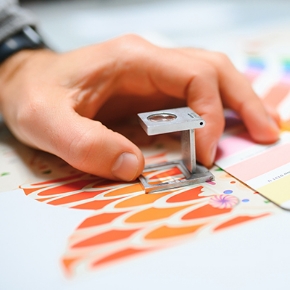
Latex printers are built for easy operation: automatic maintenance, user-replaceable printheads, spindle-less front loading on the 730 and 830, and job storage right on the printer. The one skill that pays off fastest is loading media and running calibration correctly, because a good calibration is what keeps color consistent from the first print of a long run to the last.
Watch Bob Miller, IT Supplies' Color Services Manager, show how to load new media and run calibration on an HP Latex printer:
What Does Latex Printing Cost to Run?
Three things drive the running cost: ink, printheads, and media. On ink, the HP 832 1-liter cartridges on the 630 and 730 run about 16 cents per mL, and the HP 873 3-liter cartridges on the 830 run about 12 cents per mL. Replaceable printheads add about 3.5 cents per mL on the 830 series, bringing its total to about 15 cents per mL. Latex uses about 30% more ink per square foot than solvent, so the number that matters is cost per square foot, not cost per mL, and the 3-liter cartridges on the 830 are where the per-square-foot cost drops.
The printer price is not the whole investment, because no latex printer ships with ink. Budget a full set of cartridges with the printer: eight HP 832 cartridges on the 630, nine on the 630W, and 3-liter HP 873 cartridges on the 830. RIP software is included on the 630, with SAi Flexi RIP Basic in the box and FlexiPRINT and CUT RIP on the Print and Cut bundles, and the 730 and 830 work with HP PrintOS. The standard warranty is a one-year limited hardware warranty, with extended HP service plans available in 2-year through 5-year terms.
Two practical costs to plan for: power and delivery. The roll latex printers need two 220V outlets, while the R530 runs on single-phase power. And these are heavy machines, 507 lb for the 630 up to 661 lb for the 830W, so freight delivery is required and liftgate service is available for residential delivery.
The number that matters: cost per square foot, printed and finished. Ink per mL is only one input, and latex's instant-dry output saves the hours solvent spends waiting to laminate.
Latex vs Solvent: The Short Version
| Latex | Solvent | |
|---|---|---|
| How the ink dries | Water evaporates at around 240 degrees and the ink cures into a resin film. Instantly dry. | Solvent carrier evaporates and the ink bonds chemically with the media. Dry to the touch in minutes. |
| Ready to laminate | Immediately | 4 to 6 hours on the Epson S-Series |
| Odor | Odorless, zero harmful VOCs, UL ECOLOGO and GREENGUARD certified | Mild solvent odor. Epson's solvent is milder than older solvent inks. |
| Power | Two 220V outlets for the roll printers. The R530 runs on single-phase power. | Standard 110V |
| Media | Coated, uncoated, aqueous, and UV-coated media, plus fabrics | Solvent-coated media only |
| Ink use | About 30% more ink per sq ft | Baseline |
| Scratch resistance | Instant, from the resin film | Excellent once cured |
| Best for | Indoor air quality, instant turnaround, decor and wallpaper, mixed media | Outdoor durability, vehicle wraps, long-term outdoor signs |
The short version: choose latex when the job needs to be dry now, odorless, and printed on mixed media. Choose solvent when the job lives outdoors for years and needs the toughest outdoor durability. Many shops run both, and the solvent lineup is the other half of that pair.
What Else Do You Need to Buy?
A latex printer is the start, not the whole setup. Here is what else to budget for:
- Ink. No latex printer ships with ink. Buy a full set of cartridges with the printer: eight HP 832 1-liter cartridges on the 630, nine on the 630W, and 3-liter HP 873 cartridges on the 830 and 830W.
- Media. Vinyl, banner, paper, canvas, film, and fabrics. Latex prints uncoated media too, so the range is wider than solvent. See the media for vehicle graphics for wrap vinyl and laminates.
- Laminate. Latex prints are instantly scratch resistant, but wraps and floor graphics still get laminated for long-term protection.
- A cutter. The 630 Print and Cut Plus bundles pair the printer with a cutter from day one, and the 730 and 830 work with HP Latex Plus Cutters through the SAi RIP.
- Freight delivery. These are 500 to 660 lb machines, and the R530 is 1,455 lb. Liftgate service is available for residential delivery.
- Print samples. Request free samples made from your own files at itsupplies.com/printsamples before you buy, so you can see latex quality on your own artwork.
Latex Printing FAQ
What is latex printing?
Latex printing lays water-based ink on the media, then heat evaporates the water and cures the ink into a thin resin film. The prints come out instantly dry, scratch resistant, and odorless, with no waiting time before finishing.
Is latex printing safe for indoor use?
Yes. HP Latex inks are water-based and odorless with zero hazardous air pollutants, and they are UL ECOLOGO and GREENGUARD certified. That makes latex prints safe to hang in schools, hospitals, and retail spaces the same day they are printed, with no special ventilation.
Do latex prints need to be laminated?
Not for most indoor work. Latex prints come out instantly dry with a scratch-resistant resin film, so they can go straight to trimming or delivery. Wraps and floor graphics are still laminated for long-term protection outdoors and underfoot.
Which HP Latex printer should I buy?
Buy the 630 for value, the 730 for production speed and color consistency, and the 830 for high-volume work and the lowest running cost. Step up to the W version of any of them for white ink, and look at the R530 if you need to print rigid boards.
Do HP Latex printers print white ink?
Only the W models: the 630W, 730W, and 830W, plus the R530 and R530 AI. White modes include spot, underflood, overflood, 3-layer, and 5-layer at densities up to 260%. The white ink is flexible, does not crack on canvas or wraps, and does not yellow over time.
How much does an HP Latex printer cost?
Regular prices run $16,445 for the 630, $19,745 for the 630W, $21,845 for the 730, $26,595 for the 730W, $32,345 for the 830, and $34,595 for the 830W, with additional savings available through HP promotions that vary from month to month. See the current pricing information at the top of this page. Call 1-800-771-9665 for current availability. Note: ink cartridges are not included.
How fast do latex printers print?
Up to 150 sq ft/hr on the 630, up to 334 sq ft/hr on the 730, and up to 388 sq ft/hr on the 830. Because prints come out instantly dry, there is no waiting between printing and finishing, so the real throughput advantage is bigger than the speed numbers suggest.
What media can latex printers print on?
Coated and uncoated vinyl, banner, paper, canvas, film, and fabrics, including aqueous and UV-coated media that solvent printers cannot print. Rigid boards need the R530, which prints boards up to 2 inches thick.
Does latex printing smell?
No. HP Latex inks are water-based and odorless, rated weak in odor intensity and neutral in tone in independent sensory testing, with zero hazardous air pollutants. No ventilation system is needed.
What is the difference between latex and solvent printing?
Latex printing cures water-based ink into a resin film with heat, so prints are instantly dry, odorless, and ready to laminate immediately, and it prints on coated, uncoated, and fabric media. Solvent printing bonds ink chemically with the media, needs 4 to 6 hours before lamination, carries a mild odor, and prints on solvent-coated media only. See the solvent printers for the other half of the pair.
Talk Latex Printing With Our Team
Not sure which Latex printer fits your shop? Our team will help you match the printer to your work, your volume, and your budget.